Reading and Unlearning

I watched this 5-minute video the other day, and I’d like to give you a quick summary:
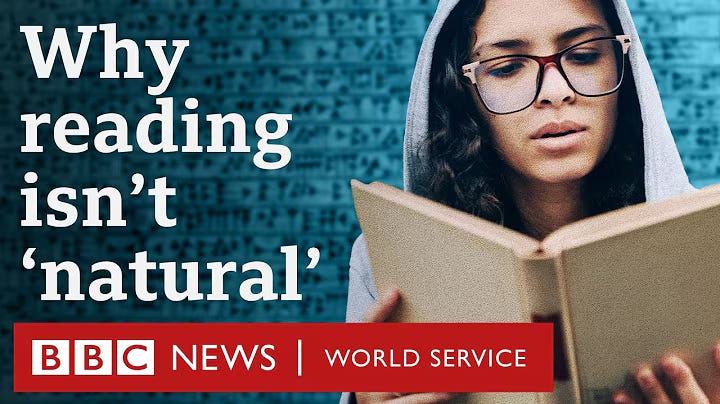
Reading engages a lot of different parts of the brain, covering all the lobes. ALL OF THEM. And it changes the way the brain functions and is structured.
Reading long texts affects the reader differently than scrolling or doing other more shorter, higher stimulation activities. Good thing you’re reading this overwrought newsletter, eh?
Reading can become a process we do very easily, but it does require a period of learning.
There was a guy who was bilungual who suffered a stroke, and re-learning Chinese and English was very different and required different parts of his brain, Chinese being a logographic (symbols-based) language and English being an alphabet-based language. He lost a lot of his ability with Chinese, but retained almost all function with his English. Okay, that’s not a key takeaway, but I thought it was neat.
The video ended up mostly being about the ways that reading is better than scrolling, and we’ll get back to that. First, I wanted to talk about ANOTHER thing I learned about, which is “Unschooling.”
Unschooled
Unschooling is a not-new trend where, basically…I’ll sum this up in a somewhat mean way: Unschooling is the idea that parents can/should pull their kids out of schools and homeschool them, but especially by “unschooling” which is a means by which the child’s curiosity and interests drive what they learn rather than a curriculum.
Now, if I’ll allow me to be fair for a moment, I think I understand the intent here. Unschooling might be good for a kid under a specific set of circumstances, for a limited period of time, and assuming that the parents are able to provide a wide range of options and opportunities in terms of time, finances, and so on. I could see this being a great idea during the summer, for example, to let interest guide a kid and have some small structure around their learning during off months.
I can also understand that for many parents, it’s really, super hard if your kid is being bullied at school or just having a hard time with the social component. I don’t think unschooling is the answer, but I just want to say that school sucks ass and I can understand people looking for other options.
Probably the best argument for unschooling, or unlearning, in my opinion, is the possibility that in an AI-informed future, kids may not need to learn the sorts of things they do right now.
And in some ways, we might already be there.
For example, a simple problem like “How many miles will my car go before I need to fill it up with gas?” is one that haunts many a math textbook. In real life, in the past, lot of us would work it out by filling it up, setting the trip odometer, and then seeing where it was when we were very close to empty. Boom, done. Then, if I wanted to know whether I could make a certain trip on half a tank, I’d do the math.
Today, my car tells me how many miles to empty in real time. I can google the answer for my specific car right now. And, as we move to electric vehicles, people won’t be filling up so much as they’ll plug in every night, so it becomes a bit moot.
When I was in school, you couldn’t just type a math problem into a computer and have it solve the problem for you without a pretty good knowledge of how the computer would receive your order-dependent equation. When you got the wrong answer, you had to figure out why, and to do that, you basically had to know how to do the math. Today, not really an issue.
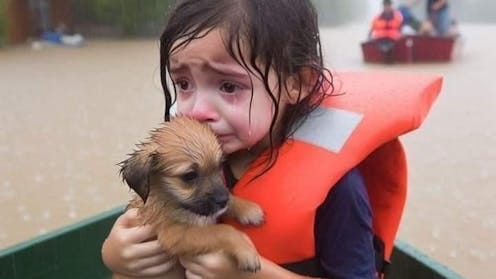
All that said, my BEST argument for unschooling is based on a hypothetical, possible, pretty specific version of the future becoming reality in the next 5-10 years where AI becomes incredibly useful for practical things as opposed to being used to make a completely fake image of a puppy suffering in a flood. And upon closer inspection, I guess there’s also a child in the picture.
Betting your kid’s life on my hope that AI will make a lot of human learning pointless? Not smart.
Convergence
Where these different things I’ve been exposed to, the nature of reading and the idea of unschooling, converge, is here. You made it!
I think there’s an idea floating in the ether, perhaps an idea that started with the last few decades of no-research-based ideas about how kids learn to read “naturally.”
There’s a really good podcast, Sold a Story, that covers this in-depth, but basically a lot of changes and changebacks in curricula over the last few decades have come around as a result of flawed, unresearched thinking around the ways kids learn to read.
Personally, I think we’ve hit a point where we’ve got some pretty good techniques for teaching kids to read, so good that reading has become something that we assume is natural.
And in that way, I think reading might be a victim of its own success, much like measles vaccines.
Before the release of vaccines, measles infected about 3000 people for every million. By the year 2000, this plummeted to about 1 case per million.
However, since, the early 2010s, we’ve seen measles ticking back up, and I attribute this, at least in part, to the fact that you and me, we probably don’t know anyone who had a bad case of measles. When you don’t see something happening, because the cure is working, you tend to think it’s no biggie.
In general, since the early 1900s, the literacy rate in the US has gone way, way up. But in recent years, it’s on the decline again.
This could be for any number of reasons, COVID school closures is oft-cited, as well as online distractions and so on, but the main thing I want to focus on right now is that regardless of what you attribute it to, it seems pretty consistent that we’re talking about some kind of issue for which all of the remedies are education-based.
Meaning: Reading is not a skill that most people will just “pick up” as they go. It’s something that you have to be taught.
Why Reading Being Unnatural is Great
It’s my new favorite example of the naturalistic fallacy, the idea that something being natural makes it automatically better for us than something unnatural.
Classic examples of why this is dumb are things like arsenic or foxglove, things that would NOT be good to ingest, but do occur naturally. Also, we could extend this to rocks. Rocks may be good for some things, like sitting on, but not good for eating. Eating a rock is not necessarily better than eating a Tasty Wendy’s Double-Stack! Get Yours Today! Shout My Offer Code, Pete’s Librarian Thoughts, Into the Drive-Thru Speaker to Get 10% Off on the Confusion You’ll Cause Because That Offer Code Isn’t a Thing.
I think reading may be a better example of the naturalistic fallacy, though, because reading is unnatural and fairly universally recognized as being a good thing.
Reading will not occur naturally. You can train a human being, and probably some other creatures, to associate symbols with actions or even sounds, but this does require teaching. A person who grew up in an underground bunker with no exposure to printed matter will not be able to pick up a book and have any idea what is contained within.
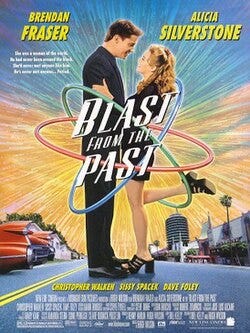
A caveman will not just naturally know how to read without some instruction.
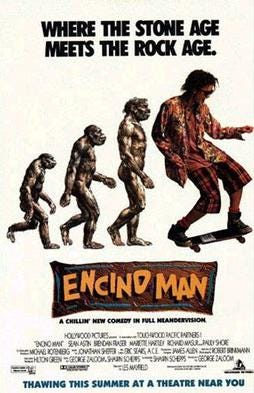
A boy who grows up in the jungle CAN learn to read, but not without some help.
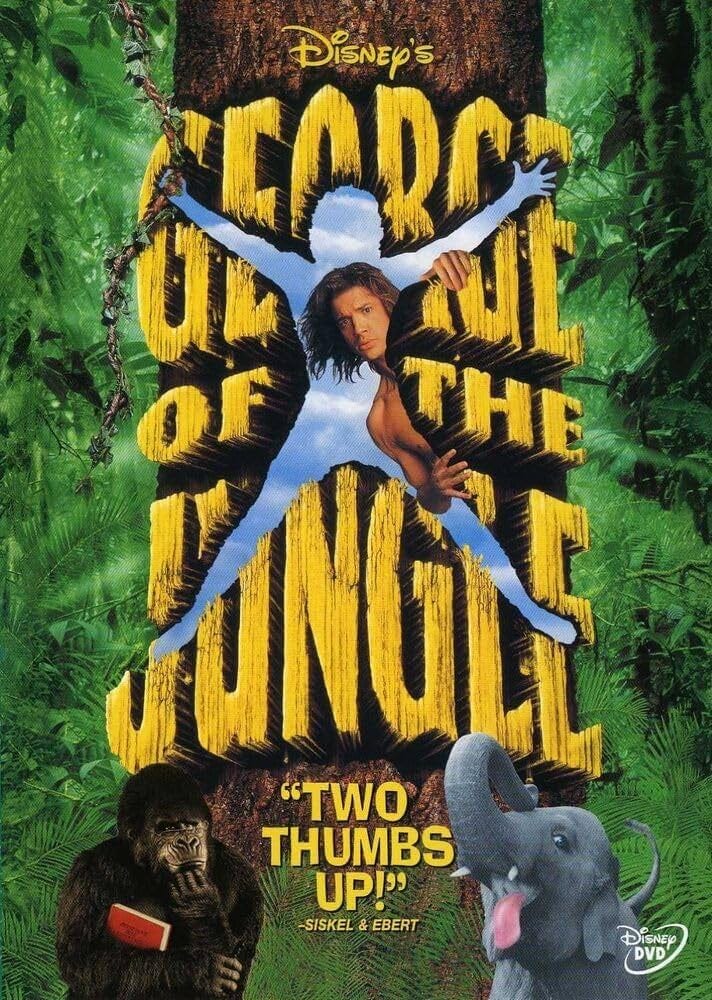
And there are probably other, non-Brendan-Fraser movies that present scenarios where a person won’t just naturally have the ability to read.
This is also, by the way, why most language-learning (second language) programs involve SOME reading, but don’t generally just hand you Moby Dick in another language and have you go for it.

Even with the ability to read and the knowledge that printed matter conveys meaning, it’s not easy, or even reasonably possible, to translate a text about a huge whale with a giggle-worthy name.
Reading being unnatural gives us humans a huge, HUGE advantage. It’s like steroids for information spread. It’s why you can know things that someone else knows without ever meeting them.
What Does The Science Say About Unlearning?
Basically, there’s almost no science on this, it’s people going with their gut. This is partially because scientists recognize that it’d be unethical to randomize which kids go to school and which are unschooled, and that’d be the only way to really figure this all out (quick aside: this is why a lot of studies present less-than-good info, if a group is not random, if they’re selected or self-selecting, their outcomes may not present an accurate picture. For example, people who elect to have sessions with a trainer may show better fitness gains than people who go it alone, however, you have to account for the fact that people who see a trainer might be more motivated to begin with, as evidenced by them making an appointment, may have more resources, like money and time, and may have a specific reason for their recovery, like a recent surgery, which is what prompted them to see a trainer. So, if we look at the effectiveness of trainers in terms of fitness outcomes, we might see a skewed picture unless we randomly assign people to a trainer while also randomly assigning people to work out solo).
While there’s not much info on the efficacy of unlearning or unschooling, we CAN look at the science of learning, in general, and make some decent guesses.
For one thing, unschooling isn’t really a new idea. Some will say its roots go WAY back, but that’s kind of bullshitty . When we’re talking about the 17th century, we’re talking about a RADICALLY different world in terms of public education. But unschooling has a relatively modern thread starting in the 1970s. And we’ve seen it come and go in cycles: Someone gets this idea about teaching kids differently, it plays out a bit, then it goes away, rinse repeat.
It doesn’t seem like it has a ton of staying power, and it doesn’t seem like there’s any evidence from these previous iterations that’d suggest it’s a wonderful way to educate a child.
What we DO know is that guided instruction seems to be a better way to teach than to have self-guided, “wonder-based” kind of stuff going on.
My Unscienced Thoughts
My main issue with unschooling is that when a child is pretty young, they may seem to progress by following their interests, but ultimately, if they don’t have basic math and reading skills, they may not be able to engage with activities that would be very stimulating for them, very interesting for them, later on, because they don’t have the basic abilities that would allow them to do so.
There are people who become accountants. Total fucking weirdos who like spreadsheets. Hey, it happens, but I don’t think it happens when they’re 9. However, I think the math foundations they start to build at 9 are pretty important to that adult outcome.
My secondary issue is that the world has become complicated.
The people who are currently publishing, say, medical information, don’t make it at a typical consumer’s level. If you’re below that, below a typical reading comprehension level, you don’t have a prayer of understanding that information, which means you really have no ability to discern when information is good or bad, whether it’s likely accurate or not.
My concern is that unschooling will likely result in a lot of people who might know quite a bit about a SUPER narrow range of things. Maybe they would learn how to fix cars, and that’s great, however, if they don’t learn a little math that helps them figure out how much they can profit in a month, if they don’t learn a little bit about filling out stupid bullshit forms online, they will never own their own shop.
I think unschooling may result in people who are easily taken advantage of. I think it might give people a very narrow range of options as they enter the workforce.
The Real Answer: It’s Both
Your kids should probably be in school. Unless you’re like a Harvard professor, who’s also married to a…let’s say Brown professor (keeps things spicy!), and you teach in different disciplines, I don’t think you’re going to be able to provide the kind of education you might think you will.
Public school isn’t perfect. I HATED school when I was a kid. Hated it, dreaded it, cried most years on the last day of summer.
I have a friend whose kids cried on the last day of SCHOOL because they were sad it was over. I think they are sick.
I didn’t LIKE school, but that doesn’t mean it wasn’t good for me.
I think the ideas of unschooling are great as a supplement to learning. I think that evenings and weekends are a great time for kids to pursue their interests, regardless of whether they are academic or not.
I think, if your family is planning a Disney trip this summer, it’d be great to let your kid plan it. Have them make a budget. Have them look at a map of the park and decide what to do. This would involve quite a bit of learning, motivated by something they would probably enjoy.
I think, and this is harsh, that most kids don’t really know what they want to do when they grow up. Hell, most adults don’t know what they want to do when they grow up slightly more.
If you’d asked me if I’d want to work in relation to books and reading as a kid, I would’ve laughed in your face. IN YOUR FACE.
Fortunately, I learned enough about books and reading that when it came time to settle for a life path on which I could slowly march to the grave, I had enough background to work that out.
If it’d been up to me to decide, I would probably be nearly illiterate, shit with numbers, and…well, I guess in line to be the next President.
Where Reading Advocates Might Get It Wrong
To get back to the first video: What’s the value of reading long texts versus short stuff?
Well, we’ll just have to cover that next time!
Cliffhanger!
.