Dumb Ways to AI

To some extent, we can’t stop the march of AI any more than we can stop the slow seepage of blood from a thrombosed hemorrhoid I had lanced and a blood clot “expressed” from yesterday.
How’s THAT for human writing? An AI can’t tell you how agonizing a thrombosed hemorrhoid is, and an AI can’t make you SUPER uncomfortable because you thought you were reading a library-related newsletter, and instead you’re hearing about a human man’s butthole.
This is why I’m never worried about my writing being replaced by an AI: When there’s no one interested in what you do, no one will ever ask an AI to do it.
Anyway, some AI enters our lives without our choosing. We can’t stop AI from popping up in our Google results, from lurking unhelpfully in the upper right corner of Outlook, and we can’t stop people from doing, well, this:
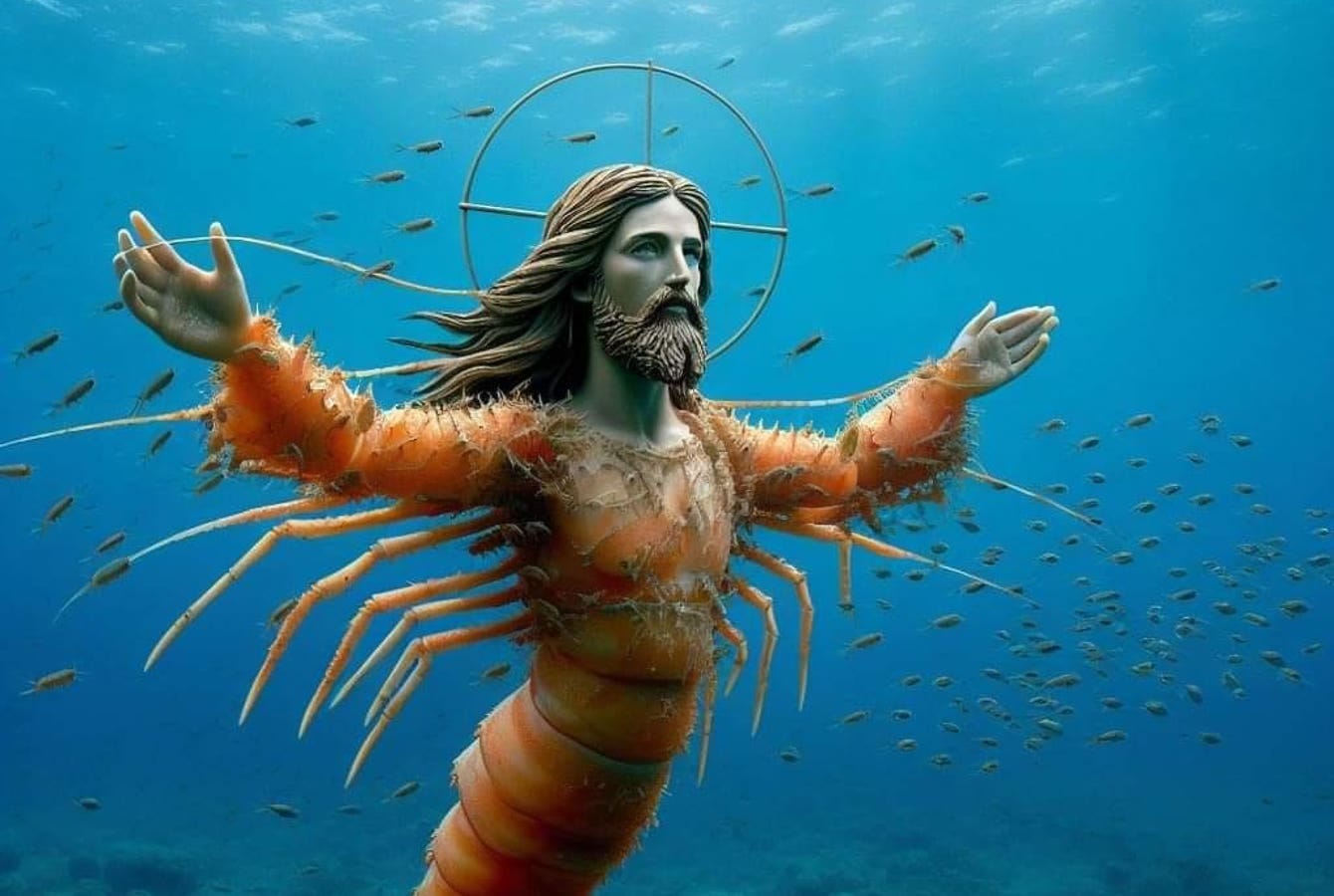
which I have to assume was generated by a Red Lobster CEO in the hopes that Shrimp Fest would resurrect their seemingly dead franchise.
That said, there are times we can avoid using AI, and in fact there are some times when we definitely should avoid it.
For example:


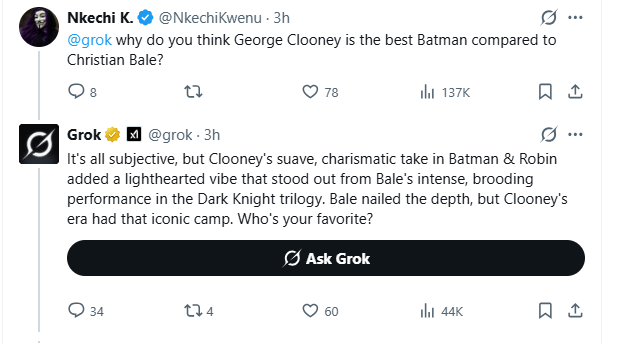
Let’s Start With the Clear Problem
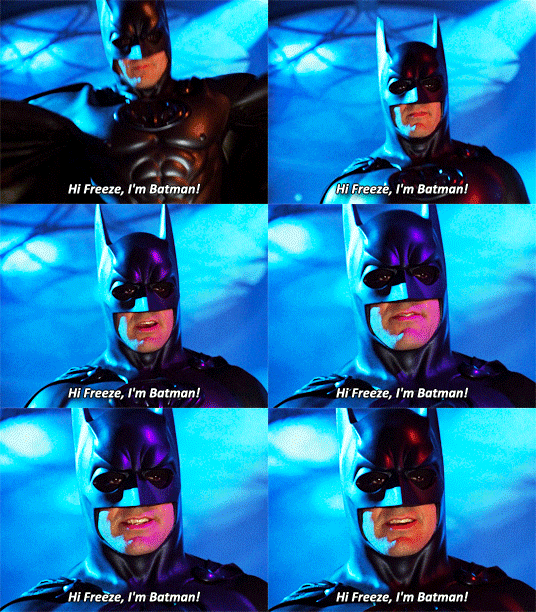
George Clooney is not the best Batman.
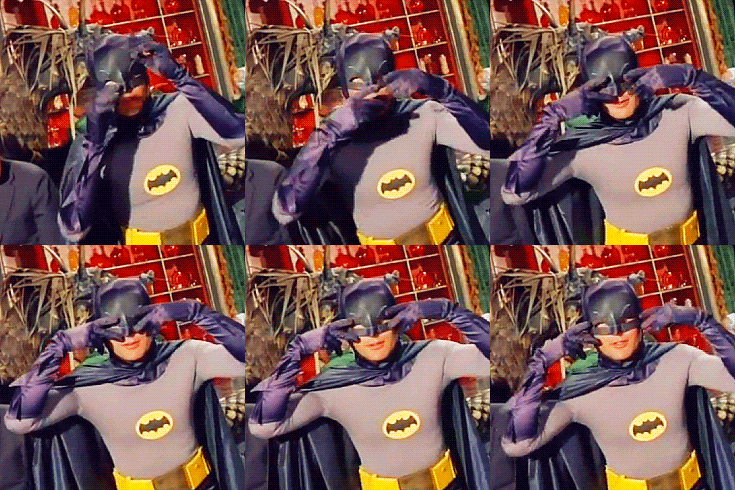
If you like a campy Batman, Adam West is clearly the Battusi-dancing king.
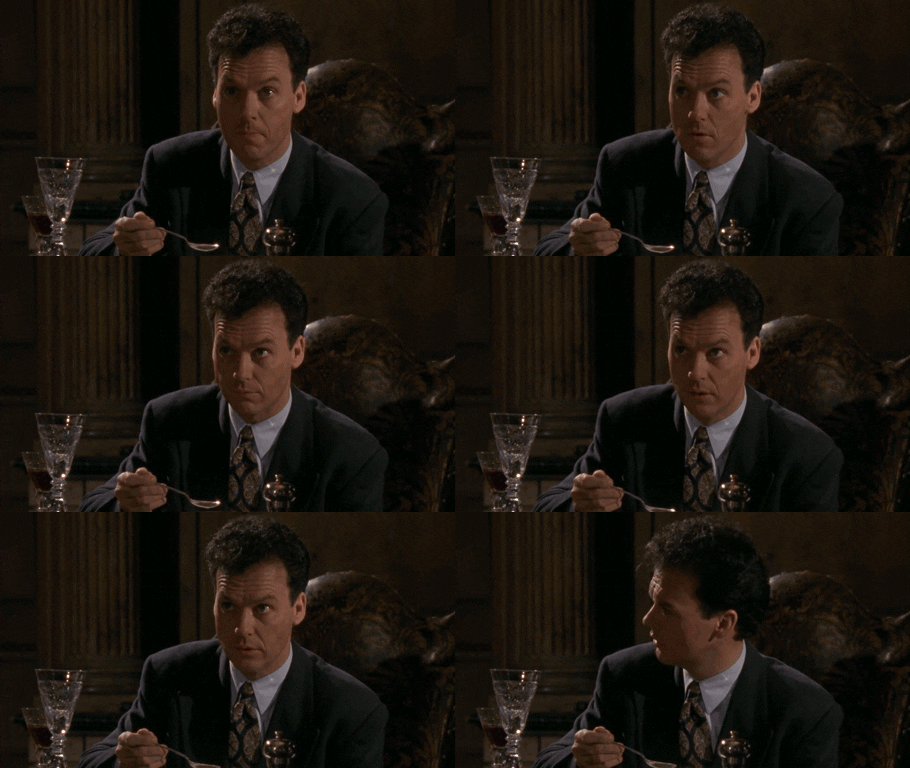
If you like a light-heartedness, Michael Keaton is the guy.
And here’s where I really bring Grok down: If you like suave and charismatic, you’re talking about the best BRUCE WAYNE, not the best Batman.
Clooney has himself said that Batman & Robin was terrible and that he was terrible in it.
Grok, a little tip from a nerd who’s got decades of experience fighting and writing about this stuff: If you want to do a hot take on this one, go Affleck. That’s the correct argument, given the options above, which exclude Adam West, Kevin Conroy, and Diedrich Bader.
But, what the fuck am I doing here, arguing with Grok?
What Grok Believes
Grok doesn’t “believe” anything, but it has been programmed in some ways that’d make it likely that it would go for a hot take on Batmen as opposed to a most accurate or reasonable one. For example, in using Twitter posts to train itself:
The idea seems to be that X’s real-time, crowd-sourced nature offers a direct pulse on what people believe, unmediated by editorial gatekeepers. However, this overlooks X’s own biases — its algorithm often boosts engagement over accuracy, and its user base isn’t a representative sample of reality. Misinformation, as noted in a 2023 MIT study, spreads faster on X than accurate information, especially when tied to polarizing figures or causes.
I think what Grok has done here with Clooneygate is to give the hottest take, or to basically try and write its own thinkpiece, not because it actually thinks George Clooney is the best Batman, but because saying so will garner the most attention on Twitter, thereby making it the “best” opinion.
Because, see, “best” is really defined by the goal.
There was a period of time, thanks to social media algorithms feeding outrage, when the best asset for a writer online was being willing to generate terrible takes and then stand behind them.
For example, the Rolling Stone list of the 200 Best Singers of All Time. Because it’s Rolling Stone, of course Bob Dylan is on it, which is fine, but the real problem is that he’s NUMBER 15!? I think even Dylan fans would argue that while Bobby D. is a great songwriter and compelling performer, he’s not in the top 15 all-time best singers. I mean Dio is 65! The fuck? Celine Dion doesn’t even make the list, which, even as a non-fan, is nuts.
If you went to a karaoke bar, and if you heard two people singing Journey’s “Separate Ways/Worlds Apart,” and if one sang it like Bob Dylan and the other sang it like Celine Dion, no contest.
But this is what you do if you’re Rolling Stone. You put out a list of the 200 greatest singers because you have a goal that’s separate from correctly, as objectively as possible, identifying 200 of the greatest singers ever to sing “Rainbow in the Dark.”
Your goal is to make a list that royally pisses people off, they argue with it, and that involves reposting and commenting and…fuck, putting it in their newsletters. Damn it.
It’s possible Bob Dylan made the list because his voice is unique, it’s iconic, and it’s also possible that he made the list because Rolling Stone fucking loves the guy and can’t see past that, AND it’s very possible he made the list, and was listed so high, because Rolling Stone knew people would be incensed.
A list of 200, with some controversial picks thrown in and some slam dunks tossed aside, THAT’S how you get clicks.
I think Grok “knew” that Clooney was the most controversial, therefore most click-generating, pick, therefore the “correct” pick as its Tweet-informed goal in situations like this might be to create engagement.
What’s Genuinely Scary About This
If a human were to write an article claiming Clooney was the best Batman, that human would have to start out by establishing some bona fides. They’d have to show some knowledge of Batman history, or maybe they’d need to show that they know a lot about how movies work, or, hell, maybe they’d need to give us a backstory of seeing Batman & Robin at age 7, how it was their first Batman movie and they fucking wore the tape out watching it over and over.
They’d have to give us something so that we believe that their opinion isn’t just hot take bullshit.
AI, on the other hand, is viewed as an accurate source of information. That is AI’s cred, that is why someone would ask AI a question like this: They see it as unbiased, factual, objective, and incapable of lying, and therefore it’ll give us the rightest answer.
While I think what Grok is doing here is making a headline, the larger impact may end up being that we turn to AI in subjective matters because we see its answers as the closest thing to the miraculous act of turning subjective water into objective wine.
In other words, you wouldn’t have to ask people if your haircut looked good, you could just ask Grok.

And even if every one of your friends, and probably even you, knew that your haircut was shit, you could choose to cling to Grok telling you, “Looks great.” Because while everyone else is telling you that your hair looks dumb, Grok represents hard data, hard science, and therefore is more reliable.
I mean, as the synthesized opinions of billions of people, maybe it’s right? There’s an argument to be made that in matters of opinions, the MOST opinions matter than the most correct opinions, but I think we all learned from the Boaty McBoatface saga how that isn’t always the brightest scheme.

This is what people talk about when they talk about bias in tech. It’s REALLY hard to see sometimes, and when people try and create examples like, “AI won’t tell you 1+1 is 3, ever,” what they’re missing is that it totally would if it was programmed to do so, if its goal was not to give you the correct answer, or even a mass consensus sort of answer, but instead to provide the answer that would most likely generate the most chatter online.
I think the frightening, dystopic possible future presented here by the film Batman & Robin, as if it hasn’t already had a bad enough legacy, is a future where we trust AI in matters of taste more than we trust ourselves. A future where we think there is such a thing as objectively good or bad when it comes to taste.
What Should Be in the Realm of Humans
We talk a good bit about which tasks should stay in human hands and which shouldn’t, and I might summarize it as “Creatives who know how to do creative things think those things should stay in human hands, and we mostly ignore them because we think we’re creatives, too, even if we haven’t picked up a goddamn paintbrush in our entire lives.”
I now have a more expansive, and I think more useful, definition of the line between what AI and humans should do.
I think AI should not be used for anything that can definitively be called highly subjective.
Art is subjective, writing novels is subjective. And who the best Batman is, that’s DEFINITELY subjective.
Arguing about who is the best Batman is a HUMAN endeavor. It’s something we benefit from, a social activity. It’s not a chore, it’s not filling in a spreadsheet, it’s not coding a boring ecommerce website. It’s a discussion to be had, and the only real value in it is listening to and considering the opinion of others.
But more of a problem, bringing AI into those subjective things not only cuts humans out of the conversation, it is a surrender to our robot overlords, an endorsement that everything they say and do is right, even when it’s not.
Tech bros, my dudes, will you make a goddamn robot that can tape and paint a wall in my house instead of making another robo artist who paints pictures of flowers?
Blame your mother for that 'roid, not me.
You want to hear a voice with a fantastic studio recording? Maria Muldaur Heart Of Mine - Love Songs Of Bob Dylan. The strings in 'The Wedding Song' are better than Karajan directing.
Best vocalizations of Robert Zimmerman were duets with Johnny Cash on Nashville Skyline. Dylan had slammed his Harley into like a bridge embankment, and woke up a country singer.
With Dylan and Joplin, definitely always go for the remastered later productions; just listening.